
Let me introduce you to three letters you are going to hear a great deal about in the months ahead: SGO. If they mean nothing to you today, they soon will. SGO stands for Scholarship Granting Organization — and thanks to a change in federal law, Mississippi is about to see a whole network of them spring up, channeling tens of millions of dollars into Mississippi schools. This is about to become a big deal.
Here is how it works
Every year, you — like millions of Mississippi taxpayers — send a chunk of your income to the IRS. Thanks to the new federal tax credit, you can choose to redirect $1,700 of it to a local SGO, rather than give it to Washington. You get to decide where that slice of your own tax dollars go. The SGO then uses the money you give it to fund places at local schools.
This ought not to be a hard sell
Yesterday I sat and listened to the inspirational T. Mac Howard, Founder and Head of School for Delta Streets Academy in Greenwood talking about the work his team is doing to extend education opportunities in the Delta. As I did so, I was struck by a simple thought: would you rather give $1,700 of your tax dollars to the federal government, or give it to provide a classical or Christian education to young people in our state?
Mississippi is well placed to seize it. It's not just Delta Streets, but Redeemer's, Vineyard — in fact, we have dozens of other non-government schools spread across our state.
I think we are about to see a flurry of activity to set up SGOs — and rightly so. And it will be the Governor, Tate Reeves, who decides which organizations that apply to become SGOs get designation. Choosing a strong slate of SGOs could prove to be one of the most consequential decisions of Gov Reeves' entire time in office, if it helps lay the foundations for change.
A rare opportunity
Here at MCPP, our job is to make sure Mississippians understand this opportunity — and seize it. So at our education freedom website, CompareMySchool.com, we have a plain-English guide to the tax credit — and a fact sheet you can download, print, and share. We will even host the definitive Mississippi SGO Index: a register of every approved local SGO, rated against key metrics, so taxpayers can act with confidence and parents can see their options at a glance.
We've built the definitive guide to SGOs: CompareMySchool.com/sgos
This is a rare opportunity. Let us make the most of it.
For decades, America has been told that the key to better schools is more money. Underperformance, the argument runs, is really a question of resources. Just give the teacher unions what they ask for, and good outcomes will follow.
Mississippi is starting to show that this simply is not true.
Over the past decade, Mississippi has made such progress in fourth grade reading that people have taken to calling it the “Mississippi miracle.” Mississippi ranked 9th in the country for fourth grade reading in 2024, up from 49th in 2013 — a forty-place climb in a decade, from near the bottom of the table into the top ten.
Mississippi’s fourth graders now read better than their peers in New York, Minnesota and California — every one of them a state that spends a great deal more per child than we do. And here is the part the spend-more crowd would rather you did not dwell on. We get those better results on far less money.
Mississippi spends around $12,300 per pupil, one of the five lowest figures in America. New York spends $31,918 — more than two and a half times as much — and its children read less well for it. New York, in other words, buys more than two dollars of schooling for every one of ours, and ends up further behind.
Perhaps the starkest comparison of all is with California. A Black fourth grader in Mississippi is now somewhere between two and a half and three times more likely to read at grade level than a Black fourth grader in California — 19 percent reach proficiency here, against just 7 percent there — and California spends well over half as much again per pupil as we do. If money were the answer, those numbers would be the other way round.
There is no reliable relationship between what a school spends and what its children actually learn. Mississippi proves this point not only when you compare our results to other states, but when you examine what is happening inside Mississippi in granular detail.
Here at the Mississippi Center for Public Policy, we built a free online tool — CompareMySchool.com — that lets any parent in the state see exactly how their school is doing. Type in a school’s name and up comes its grade, the share of children reading and doing math at grade level, and how it ranks against every other school in Mississippi — and against the rest of America, too.
We intended it to be a tool for families to use this summer, as they contemplate the start of the next school year and perhaps begin to wonder if their kids are in the right school. CompareMySchool.com pulls all of the data into one place, in user friendly format.
But once we built the site, something unexpected leapt out. The tool lets you line up every school district in Mississippi and set what it spends per pupil against how its
children actually perform. If the conventional wisdom were right, you would expect a clear pattern: the more a district spends, the better it does.
There is indeed a correlation between spending and outcomes, but it is the opposite kind of correlation. The higher the per pupil spending the worse the grades.
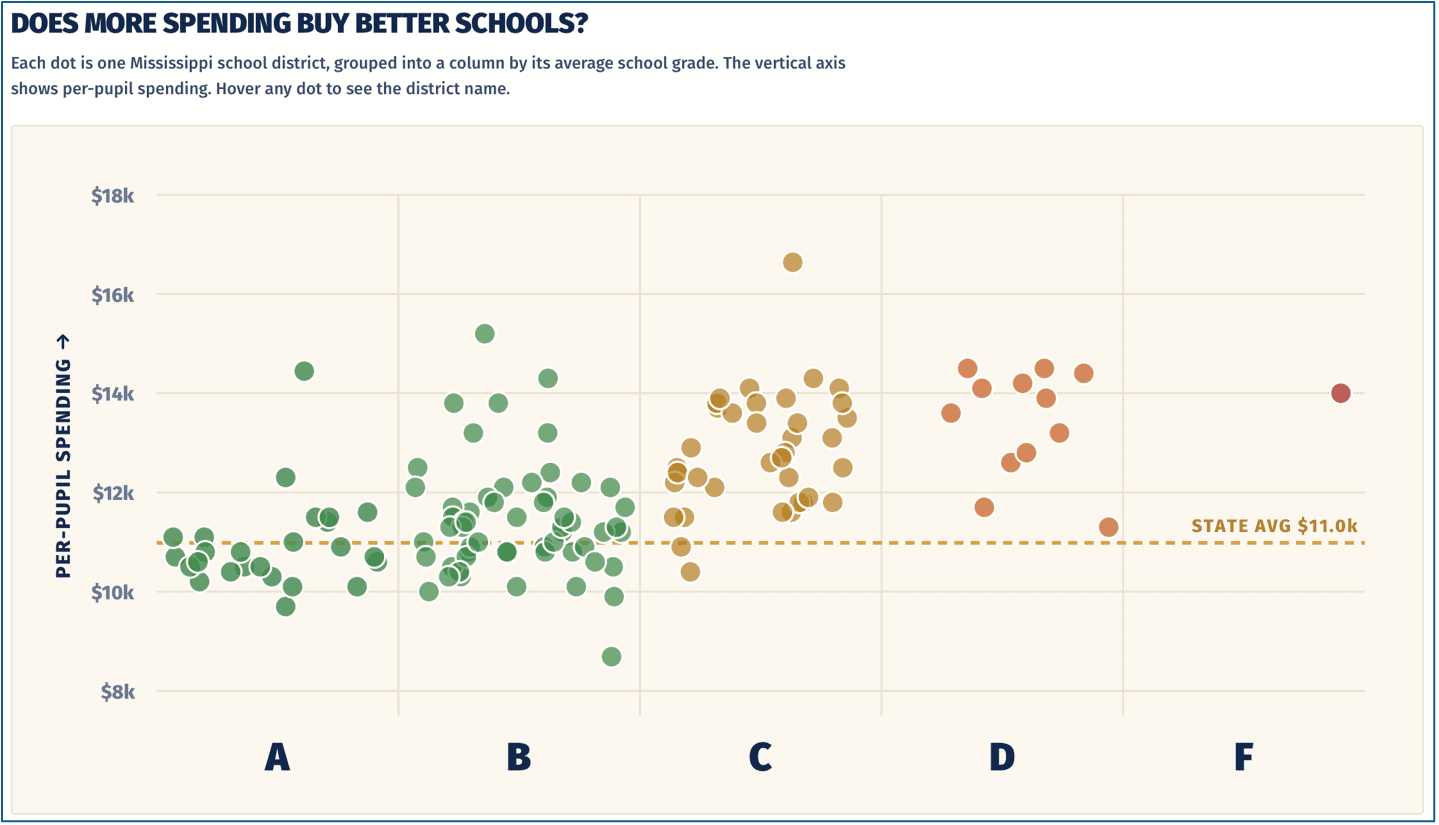
Higher spending, worse results
Across Mississippi’s districts, higher per-pupil spending goes hand in hand with worse outcomes, not better ones. The lowest-spending quarter of districts gets, on average, 63 percent of children to proficiency in reading and math. The highest-spending quarter manages just 36 percent. Read that again. The districts spending the most are getting barely half the results of the districts spending the least.
Ocean Springs, down on the Gulf Coast, is the top-performing district in the state - more than three-quarters of its students at proficiency - on about $10,300 per pupil. Jackson Public Schools spends $16,640 per pupil, more than 60 percent more than Ocean Springs, and gets fewer than a third of its children to proficiency. Petal spends roughly 42 percent less per pupil than Jackson — and more than doubles Jackson’s results. DeSoto County, the largest district in the state, educates nearly 34,000 children on the lowest per-pupil budget in Mississippi — and still beats Jackson almost two to one.
Our webtool also allows families to compare what their public school district spends against what the local private school down the road charges to do the very same thing — and the gap is startling.
Jackson Public Schools spends $16,640 of public money on each child. A few minutes away, there are private schools that charge about a third that amount. It’s the same story across the state where typical private school charges about $7,000 a year, while often getting far better results. The public sector, it turns out, is not the cheap option.
What matters is not how much a district spends, but how it spends it. This data in Mississippi strongly suggests that what we need to see are reforms that allow families dissatisfied with what their school board has to offer with the option of taking their child’s share of funding to a school outside government control.
Mississippi’s own data — now in the hands of every parent at CompareMySchool.com — makes the argument that money is not the answer. Better-run schools are, and the surest way to get more of them is to trust parents to choose.
Lawmakers across the country often insist on making “investments” in economic programs to help fill a perceived need for skilled workers. But such efforts often put the needs of the state and favored industries ahead of the needs of individuals -- and they miss big picture questions in the process.
This critical view should be taken about the newly passed UPSKILL program, which is expected to cover tuition and fees associated with getting a certificate or degree at a Mississippi public community or junior college. The program, in House Bill 562, passed with unanimous support from lawmakers and the governor signed it into law.
Initially, the program will be exclusively for Mississippians overcoming opioid addiction, hence the funding source of the program starts with money from $50 billion opioid settlement to state, local, and tribal governments. Republican Sen. Nicole Boyd told her colleagues that the program will be good for people in recovery.
“It is the program where we encourage those that are over age 24 to up-skill and get into high priority work sectors,” she said, according to the Magnolia Tribune.
The Design Problem: Labor Market First, Person Second
But UPSKILL’s eligible programs will be determined annually by the state’s review of employer demand and workforce shortages — essentially, what the labor market needs. That sounds sensible, but in practice those designations are heavily influenced by major employers who want a trained workforce pipeline at public expense. The program could function as a publicly-subsidized labor supply program for specific private employers without those employers contributing to its cost.
Crucially such an approach underemphasizes, and even ignores, the fact that each person is born with unique gifts and talents. Asking what the labor market needs and then pushing people into state-sanctioned boxes is the reverse of what should be happening.
A person with a gift for artistry, writing, craftsmanship, early childhood education, or caregiving work might find little room in a program built around HVAC, welding, and construction certifications. The program, therefore, treats people as inputs to an economic system rather than as individuals who deserve respect for escaping addiction and now have distinct contributions to make.
The state might (and probably will) eventually justify the program’s existence and call for its expansion as students apply for funding to gain a certificate or degree in an approved field and shortages in some areas are ameliorated. But in such an analysis, there’s no accounting for quality of life, e.g., if a person finds himself in a job he never wanted just because money was available to meet the need.
The Community Problem: What the State Crowds Out
It’s also worth noting that the program creates a transactional connection between a person and an employer-defined credential, but it severs and discourages the community connections important to the growth and wellbeing of a person, especially one in recovery. The state stipend is $500, which would be a manageable dollar amount for local charities, churches, civic organizations to offer, if they were so inclined.
UPSKILL’s enabling legislation intends participants to tap into other government assistance programs, including Temporary Assistance for Needy Families (TANF) to provide up to $250 for “emergency aid, childcare stipends or transportation assistance (bus vouchers or gas cards).”
That leaves no room for local charities and organizations to engage. If they were invited to, they could offer things the state is not offering: mentorship, peer cohorts, community check-ins, drug rehab integration circles, stuff that goes beyond a program and several hundred dollars. Recovery communities know that sustainable reintegration requires more than a job; it requires belonging.
The state program also has the deleterious effect of creating an expectation that the state will step in to offer money and support services, because that’s what the state does, as proven by this program. One could reasonably ask, “where does the state’s role stop and the community effort begin?”
A person who has spent ten years in a low-wage job, never touched drugs, but lacks the credential to move up — isn’t he or she equally deserving of support? The program’s initial gatekeeping, driven by the funding source, creates a hierarchy of deservingness that puts former addicts ahead of people who also struggle.
None of this is to say the problem UPSKILL is trying to solve isn’t real. Mississippi has thousands of job openings and communities hollowed out by addiction. The state stepped in precisely because communities, churches, and civic organizations hadn’t filled the gap at scale. That’s worth acknowledging honestly. It’s also worth understanding why. Is it possible that the state government’s broad list of programs, decades in the making, played some part in the lack of persistence of non-governmental organizations to meet local needs?
The critique isn’t that the need doesn’t exist — it’s that the state’s instinct to solve it by building a pipeline for employers, rather than building up people, reflects a persistent confusion about what investment in human beings actually looks like. It also avoids the bigger questions about systemic problems that Mississippi, and many other states, must begin to understand.
— Wayne Hoffman is President of the public policy education and advocacy organization, Level Up Humanity, and is a research fellow of the Mississippi Center for Public Policy.
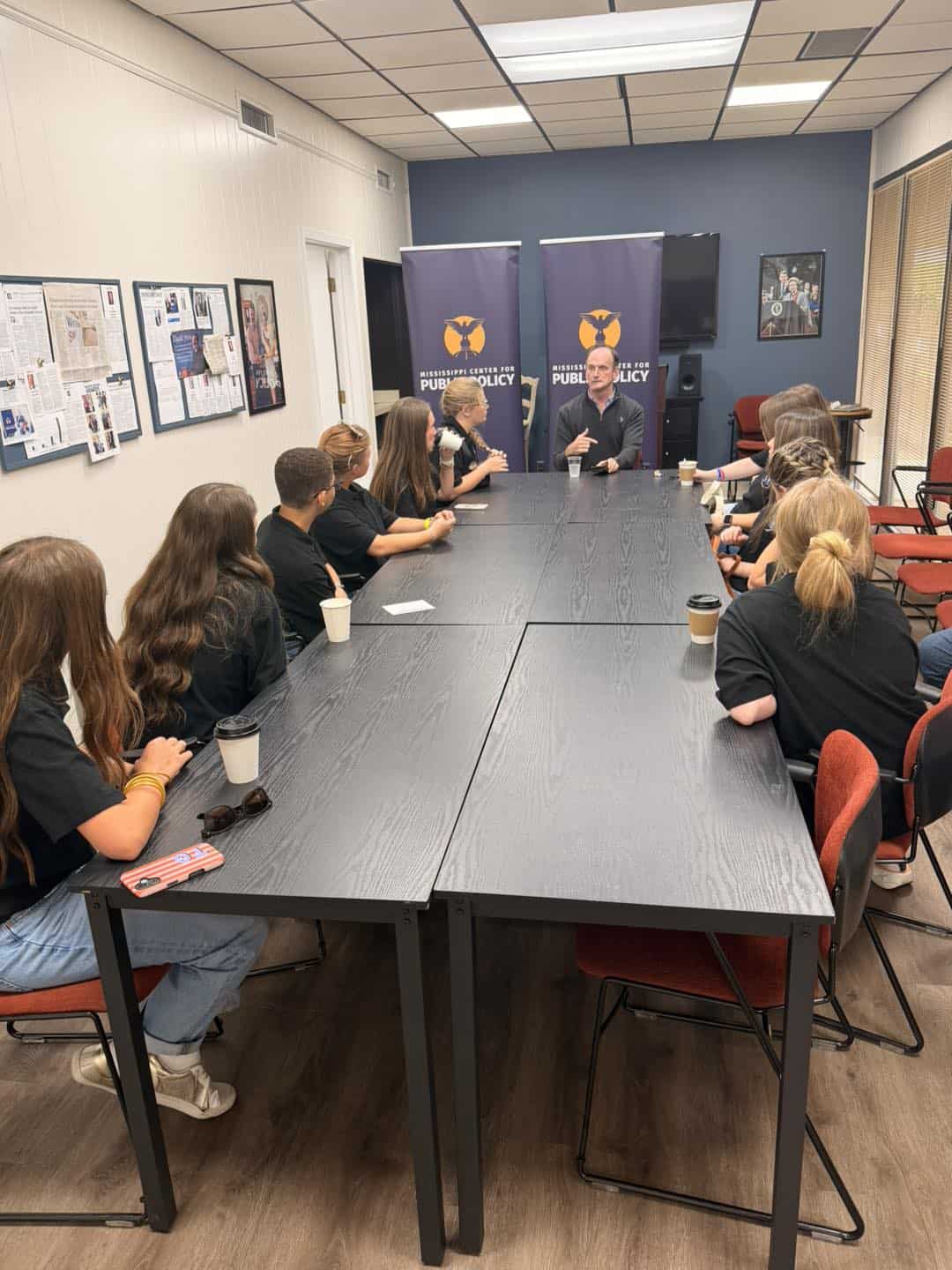
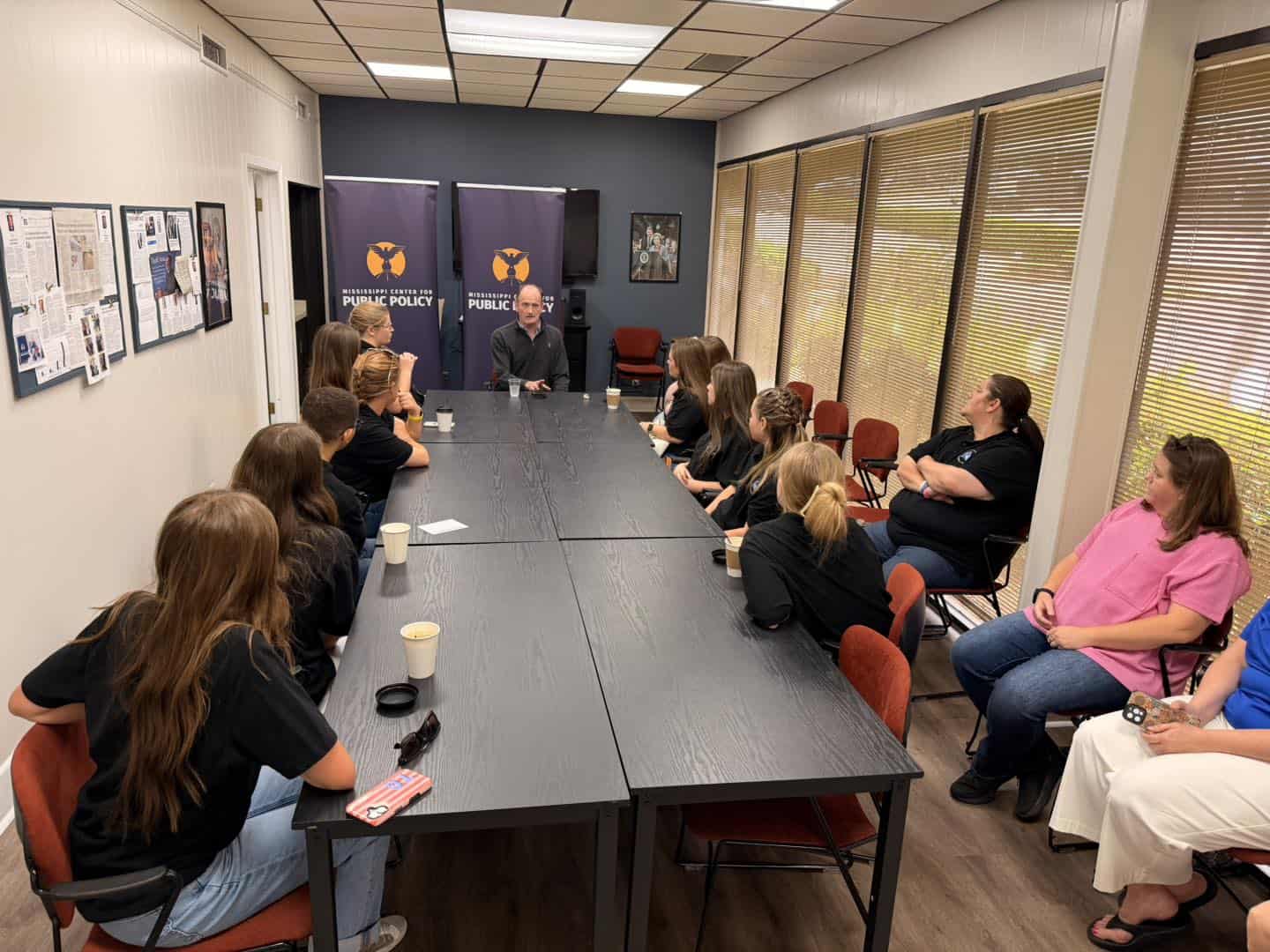
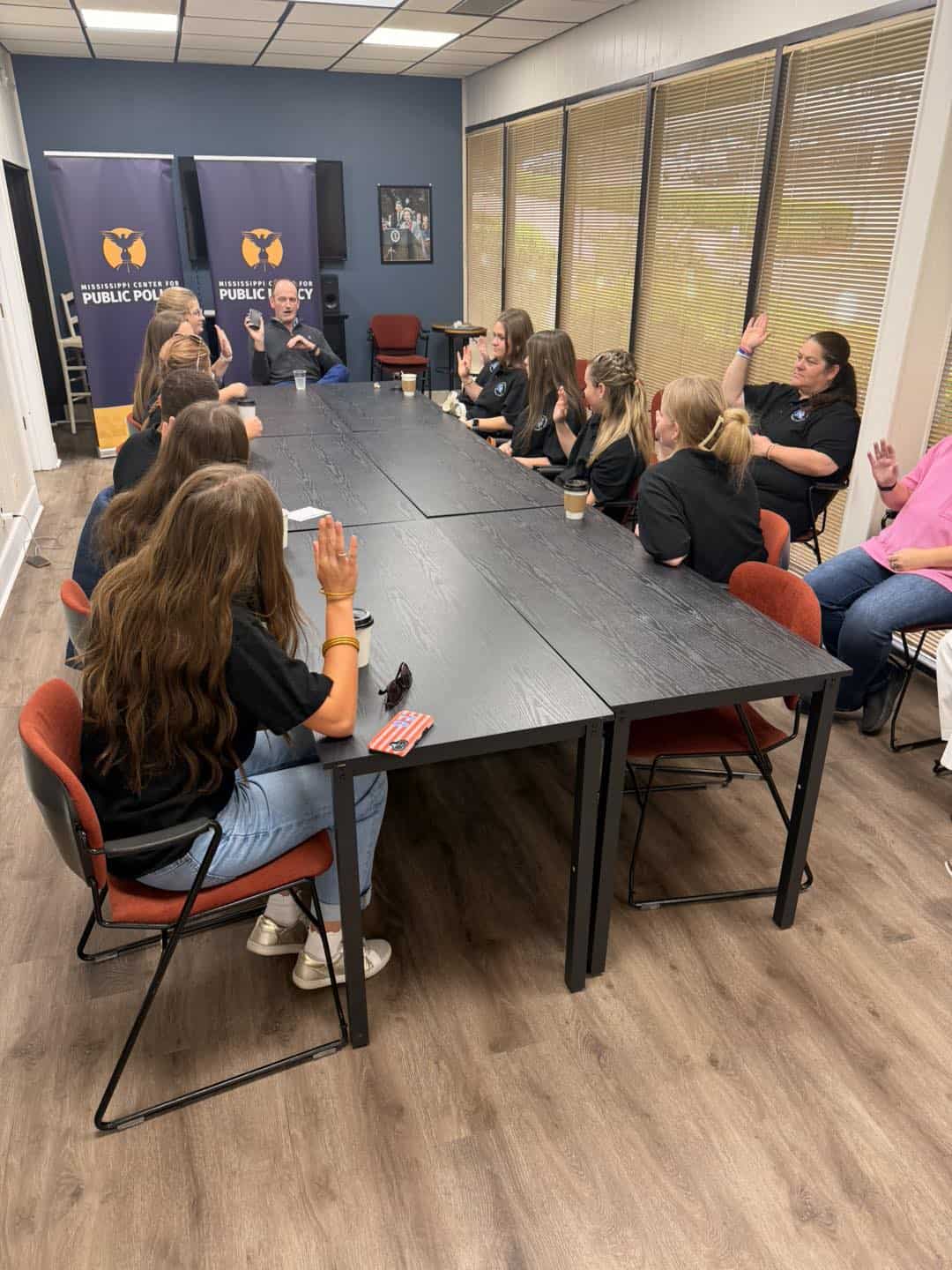
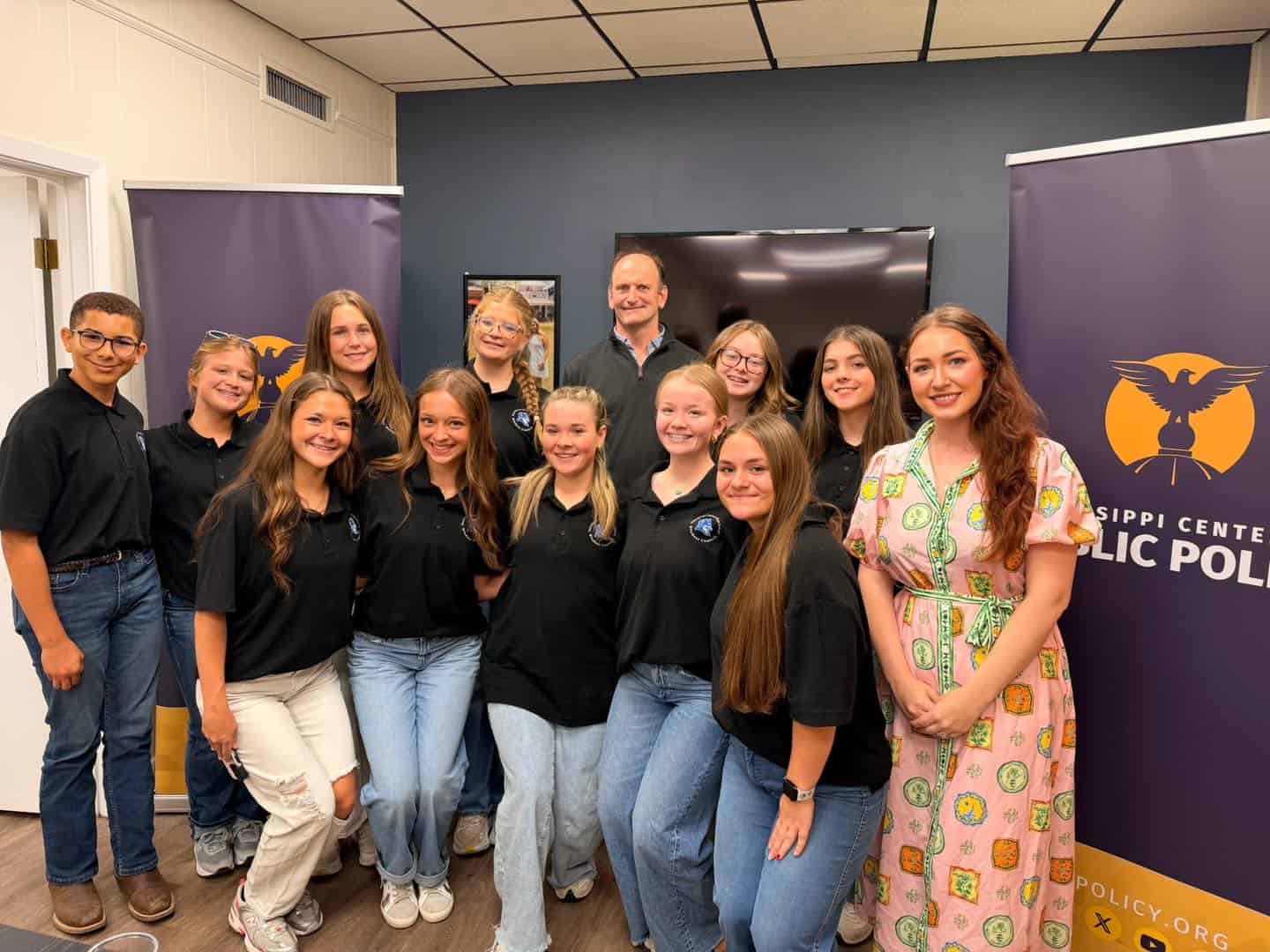
In April, we had the opportunity to welcome students from Pearl River County High School’s Student Council to our office during their visit to Jackson.
As part of a broader trip to tour the State Capitol and meet with legislators, the group made time to sit down with Douglas Carswell and our team to learn more about the role of a public policy organization and the work we do at the Mississippi Center for Public Policy.
The visit centered around a roundtable discussion covering how think tanks operate, the principles that guide our work, and how policy ideas move from conversation to implementation. Students engaged directly with our team, asking thoughtful questions about the challenges facing Mississippi, the importance of free markets and limited government, and the practical side of advancing policy solutions.
What stood out most was the level of engagement—from both the students and the educators accompanying them. The discussion was curious and encouraging, reflecting a strong interest in understanding how ideas shape real-world outcomes.
Opportunities like this matter. Creating space for young people to ask questions, engage with policy, and better understand the institutions shaping their state is an important part of building informed, thoughtful leaders for the future.
We are grateful they chose to spend part of their time with us, and we look forward to seeing where their leadership journeys take them.
While others debate these ideas from a distance, we’re in the room teaching them.
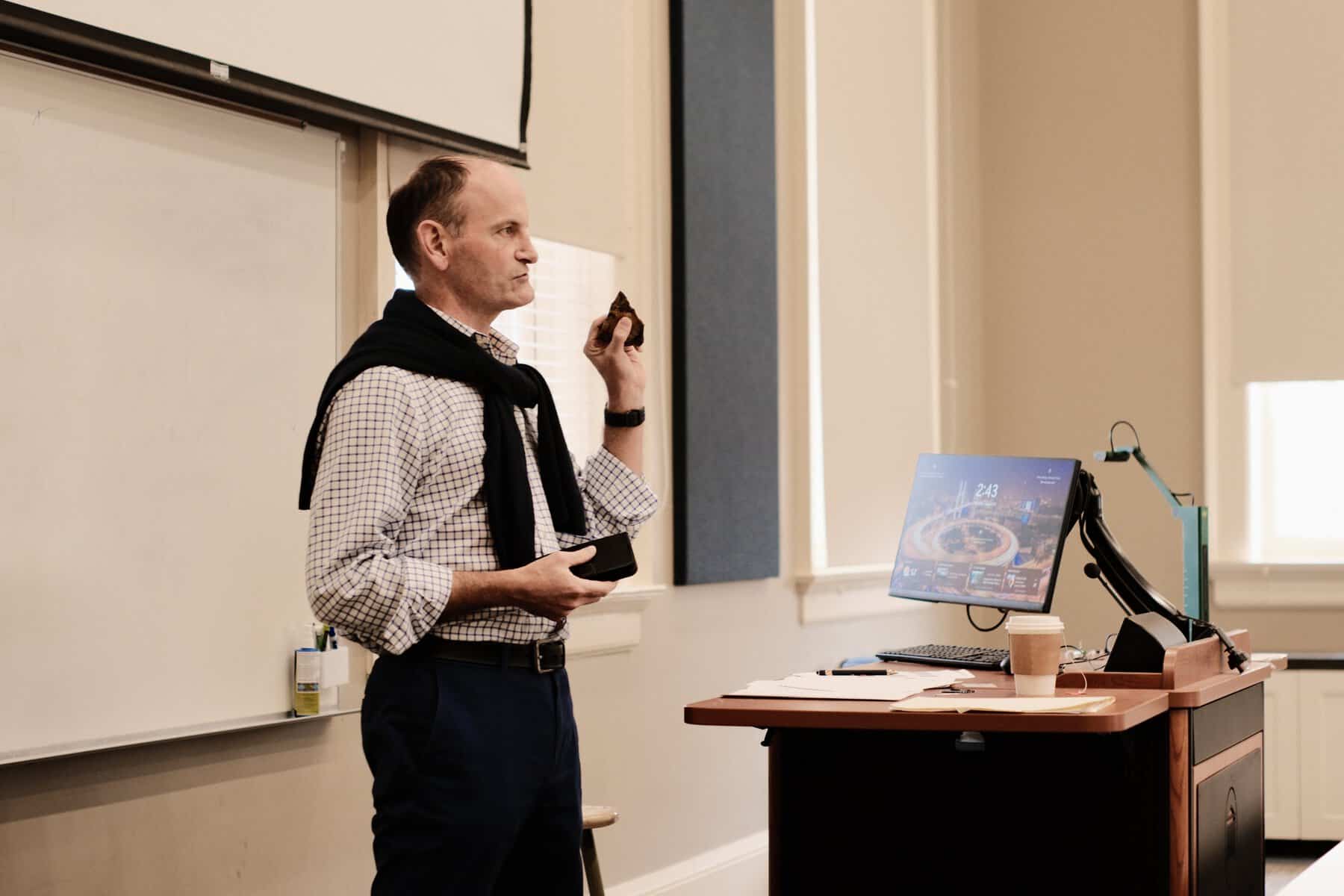
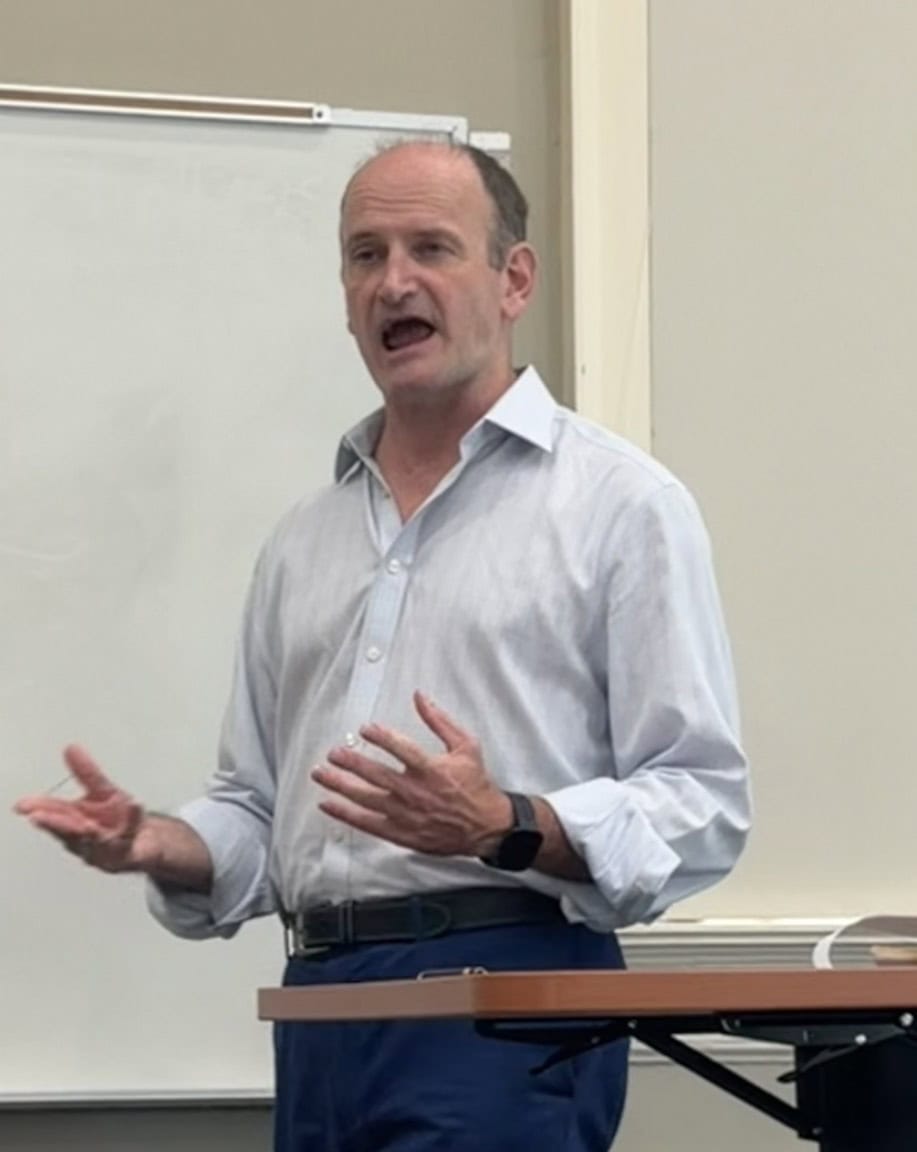
This semester, Douglas Carswell was invited to serve as a guest lecturer at the Declaration Center for Freedom Studies at the University of Mississippi—spending the semester working directly with students on the principles that make societies prosper.
Week after week, he made the drive to Oxford to lead conversations on free markets, limited government, and individual liberty—not as abstract theories, but as ideas with real-world consequences. Students were challenged to think critically, engage deeply, and wrestle with the foundations of a free and flourishing society.
Free markets. Limited government. Individual liberty.
The next generation isn’t just hearing about these ideas—they’re being trained in them, challenged by them, and equipped to carry them forward. In a time when many institutions are moving away from these principles, opportunities like this matter more than ever.
Not slogans. Not trends.
Real ideas, taught in real classrooms, to the next generation of leaders.
This is how you build something that lasts.

Over the past few years, Mississippi lawmakers have passed some critical conservative reforms. Last year, Mississippi became the first state in America to legislate to eliminate the income tax in 40 years. In 2022, we implemented flat tax reform. A few years before that, we passed important labor market reforms. In 2024, we reformed school funding to get more money into the classroom.
It is thanks to these flagship conservative reforms that Mississippi has enjoyed more economic growth in the past five years than over the previous fifteen combined.
Yet every single time one of these flagship conservative reform was being considered, I noticed a similar pattern. Those opposed to flagship conservative policy are too wily to come straight out and say they don’t want conservative policy in a conservative state. What they do instead is offer less substantial alternatives, which might be perfectly good policy, but don’t really change much at all.
On school funding, for example, those opposed to the new funding formula offered a few tweaks to the old system. Those that did not want income tax to be eliminated proposed a handful of performative tax reductions here and there. Now that Mississippi has a real chance to achieve universal school choice, we are seeing the same distraction strategy.
Speaker Jason White’s Mississippi Education Freedom Bill (HB 2) is the most consequential education legislation seen in a generation.
It establishes Magnolia Student Accounts as education savings accounts to enable universal school choice in Mississippi. Families would receive roughly $7,000 per child deposited into a dedicated account. Parents could use these funds for tuition, curriculum materials, or other approved education expenses at the school of their choice—public, private, charter, or homeschool.
The program is due to begin in the 2027-28 school year with 12,500 accounts. Half of those (6,250) are reserved for students currently enrolled in public schools, while the remaining half are awarded via a first-come, first-served lottery to any eligible student.
Speaker White’s bill goes further by dismantling outdated, self-serving bureaucratic restrictions. It eliminates school districts' ability to block student transfers: If a receiving district is willing and has capacity, students can freely switch. The bill also removes barriers to charter school growth. HB 2 allows charters to open wherever operators see demand and viability, enabling statewide expansion.
You would have to be a socialist to oppose this – which is why it was so disappointing to see some Republicans listed at the bottom of this message vote against parent power.
Having failed to kill HB2 in the House, the socialists are now trying another tactic. They are offering up far less significant reforms that appeal to conservative ears, but fall far short of giving parents power.
This week the Senate approved a cluster of such education bills. There’s a bill that will require financial literacy lessons, another that will insist on civics. One of the bills approved by the Senate will try to improve math outcomes, another that will require 8th graders to reach a certain reading standard before advancing.
All of these things may be desirable, but they fall far short of parent power.
The danger is that some misguided voices big up these bills as something more substantial than they really are – and in doing make it easier for those opposed to flagship conservative reform to quietly kill off the important bits in HB2.
HB2 has now passed out of the Mississippi House and is on its way for consideration by the State Senate. If enacted, this would represent the pinnacle of conservative education reform in the United States. Most importantly, it shows a deep understanding that truly successful education reform requires parental involvement.
The Magnolia State has made great progress in recent years on the education front. Mississippi’s fourth graders now read better than those in New York, California, or Minnesota, according to National Assessment of Educational Progress (NAEP) scores. You read that correctly: A state that barely a decade ago ranked near the bottom for fourth grade reading now sits near the top of the NAEP tables.
But despite Mississippi’s stellar progress, almost half of fourth graders still are not proficient in reading and math, and roughly one in four elementary students continues to be chronically absent.
The solution to that is not to micromanage how teachers teach in every classroom in our state, but to give families the power to choose the education for their child. Mississippi needs to give parents - not politicians - the ultimate oversight of what happens in the classroom.
You cannot credibly claim to be a conservative in the legislature if you oppose HB2. Here, incidentally, is a list of the Republican members of the House that sided with the socialists against parent power.
Who sided with progressives to try to block school choice?
- Richard Bennett
- Andy Boyd
- Billy Calvert
- Carolyn Crawford
- Becky Currie
- Jill Ford
- Greg Haney
- Stacey Hobgood-Wilkes
- Timmy Ladner
- Clay Mansell
- Kent McCarty
- Missy McGee
- Dana McLean
- Gene Newman
- Fred Shanks
- Troy Smith
- Lance Varner
Last week, House Speaker Jason White unveiled HB2, the Mississippi Education Freedom Act - the most exciting and ambitious advancement for school choice in our state in years, perhaps ever!
This comprehensive bill delivers everything supporters of parental power have long hoped for, and it aligns perfectly with President Trump’s strong commitment to education freedom.
This isn’t some minor adjustment or performative law – it’s the real thing for anyone who believes in putting parents in charge of their children’s education.
Here’s what the bill does and why we at MCPP are so enthusiastic:
- Magnolia Student Accounts: Families will be able to direct around $7,000 per child (drawn from the base amount in the new Mississippi Student Funding Formula already allocated to their child) into a Magnolia Student Account (an Education Savings Account). Parents can then use those funds for private school tuition, homeschooling, therapies, or other tailored educational needs.
In the initial phase, up to 12,500 accounts will be available, with priority for low- and middle-income families, and a balanced split between current public school students and others. The program will expand each year until every family that wants one can have access. Homeschool families participating can also receive $1,000 annually to help cover costs.
- Easier Public School Transfers: Currently it’s difficult to switch schools from one public school to another. HB2 makes it easier by ensuring you will no longer need the approval of the district you are leaving, just approval from the new school you want your child to attend.
- Statewide Charter Schools: Mississippi has had charter schools for over a decade, but strict limits have made it nearly impossible to open them outside select low-performing districts. HB2 opens the door statewide, allowing charters to launch wherever there’s demand and need.
- Literacy: Mississippi has become a national leader in raising reading standards through phonics-based early education. HB2 builds on this success by extending targeted literacy support into higher grades.
- Smart District Consolidation: Consolidation of districts would always be a challenge, but the bill takes a practical, conservative approach: It consolidates specific districts (like Copiah County and Hazlehurst) as a model, providing a template for future efforts without mandating widespread closures.
HB2 is Speaker Jason White’s flagship reform for the 2026 session, fulfilling his promise that “all Mississippi families, regardless of income or zip code, have real choices and the freedom to pursue what works best for their children.” He deserves strong support for the most significant conservative education reform our state has seen in a generation.
Dozens of Mississippi business leaders, along with former Governors Haley Barbour and Phil Bryant, have already voiced strong support. Team Trump is behind it too.
In short: If you oppose this bill, it’s hard to credibly claim to be a conservative. That’s exactly why the progressive left is already fighting it tooth and nail – they fear real parent power and will twist the facts to stop these reforms.
HB2 is now moving through the legislature, with real momentum in the House. Having had a massive conservative majority in Mississippi for years, here at last is the opportunity to implement a conservative reform in our state that will change our state for the better.
Real change is happening – and Mississippi is leading the way!
Big news on School Choice this week! A fresh poll shows massive support in Mississippi to have families, not government, control their child’s education. Mississippi voters say they’ll reward lawmakers who make it happen.
The brand-new statewide survey (October 27-30, 2025) conducted by The Tarrance Group shows rock-solid support for expanding education freedom. There is massive bipartisan support across every region, race, and political affiliation.
Any little cliques that try to derail school choice need to know what they are going to be up against. Either they can support School Choice and President Trump, or they can side with leftwing teacher unions - and lose, as some anti School Choice lawmakers in Texas found out.
Here’s what Mississippi voters are saying - loud and clear:
- 86% support parents, not government, choosing the best school for their child (58% strongly).
Support spans demographics: 87% White, 83% Black, 93% Republican, 83% Independent, 76% Democrat. - 75% support Education Savings Accounts (ESAs) for all families—no income caps, no district restrictions.
75% of K-12 parents agree. 83% of Republicans, 73% of Independents, 65% of Democrats. - 79% are more likely to vote for legislators who expand ESAs statewide and universally (+58 net favorability).
Even 71% of Democrats say they’re more likely to support pro-ESA lawmakers. - 78% agree that when funding follows the child, schools become more accountable (35% strongly).
- 77% support letting dissatisfied families switch schools and take their funding with them.
- Bonus boost: 66% say President Trump’s strong support for universal school choice makes them more supportive (+34 net).
Mississippians see progress and according to the poll, 58% say K-12 education is heading in the right direction - and 65% of parents agree.
Wanting School Choice is not fringe – it’s the mainstream position in Mississippi.
With your help, we’ll hold lawmakers accountable and deliver the education freedom Mississippi families deserve.