
When something new comes along, everyone suddenly has to have an opinion about it. Often the same one.
When crypto went mainstream, people who had never owned so much as a share were suddenly holding forth on bitcoin. When Ozempic arrived, people who had never once expressed a view on weight loss were just as eager to share the very same thoughts. Now it is AI’s turn. No conversation about it seems complete until someone has solemnly used the word “hallucination.”
AI is utterly transformative. A vastly bigger deal than almost any innovation that came before. As big as the invention of writing, or the industrial revolution — only all at once.
Whether you run a business, a club, a school — or a think tank, as I do — it is going to upend a great deal of what we take for granted. Who you hire. How you delegate. What outcomes we should even expect from our employees. It lets you work almost at the speed you can think — fast enough that knowing when to stop becomes a discipline in its own right.
My own journey with AI started where everyone’s does — marveling at how my newly opened account acts as such an awesome search engine. Call it the “Does anyone still use Google anymore?” stage: you put your new tool to work running glorified Google searches. Great fun — but if that is as far as you get, you could be forgiven for thinking the whole thing overhyped.
The second stage of AI is when you start using AI as a writing tool. This is where those who talk about hallucinations tend to be. And it is, frankly, the least interesting thing about AI. Sure, it is excellent for editing and polishing what you have written — but not the other way round, with you editing what it writes. That is the surefire route to slop.
The third is the realization that you can do things techies spent years learning to do. Figure out how to program an agent to perform one complex task, and it can then perform that same task again and again — at a scale, and a speed, no human team could match. Information and expertise that once belonged only to those at the top of society are coming within reach of everyone else. The social implications of that are at least as large as the economic ones.
Perhaps my all-time favorite TV show is Young Sheldon. The running joke throughout every episode is that Sheldon, the brilliant boy genius, is able to figure out extraordinary things, yet is forever tripped up by the mundane. Treat AI as you might Sheldon: super smart, but dumb enough to misread the obvious.
The fourth stage of AI comes when you realize an agent can handle a great deal of your existing workflow. Instead of getting you or your team to do the donkey work, you farm it out to your new AI employee — one who never tires, and shows up on time, every time, ready to put in a full day’s work.
The fifth stage arrives once you start asking what you might automate that you never imagined could be automated at all. At MCPP we are beginning to do precisely this, in all sorts of weird and wonderful ways.
This week it was reported that AI software built by Palantir has saved hundreds of lives at a hospital in Florida by catching the signs of sepsis before doctors could. No miracle cure: the system simply reads the data already flowing through the hospital and prompts preemptive action.
Now picture the same logic applied more widely. Imagine AI scanning the records of every American over a certain age, picking out each one whose cholesterol sits in the danger zone, and ensuring they are offered statins — a few dollars a day — to bring it down. AI need not conjure something out of nothing to be transformative, but to merely take the knowledge already sitting in front of us, ignored, and put it to work.
The sixth stage of AI follows when you work out how to automate the autonomous agents themselves, so that they more or less manage one another. Ask me how that is going in a few weeks…
So where might all this lead?
I am an optimist. I think Jeff Bezos is right. Far from causing mass unemployment, AI could leave us with a shortage of workers.
Yes, there will be disruption. Anyone who fails to adapt could lose out. It may not be much fun for those whose only skill is coding. But there will also be an enormous increase in output. Every one of us has some sort of comparative advantage, and AI lets us do far more with what we have than ever before.
The result could be far greater prosperity for all — provided we let energy producers produce, rather than strangle them in red tape, and provided we steer well clear of European Union-style control from the top down. The EU’s GDPR goes a long way to explaining why so much AI innovation is happening on this side of the Atlantic, and so little on the other.
One final thought. Energy policy is about to matter more than almost anything else. AI runs on power — vast and growing amounts of it — and the states and nations that produce energy cheaply and abundantly are the ones that will get to build the future. Those that hobble their energy producers will be left watching from the sidelines.
For decades, America has been told that the key to better schools is more money. Underperformance, the argument runs, is really a question of resources. Just give the teacher unions what they ask for, and good outcomes will follow.
Mississippi is starting to show that this simply is not true.
Over the past decade, Mississippi has made such progress in fourth grade reading that people have taken to calling it the “Mississippi miracle.” Mississippi ranked 9th in the country for fourth grade reading in 2024, up from 49th in 2013 — a forty-place climb in a decade, from near the bottom of the table into the top ten.
Mississippi’s fourth graders now read better than their peers in New York, Minnesota and California — every one of them a state that spends a great deal more per child than we do. And here is the part the spend-more crowd would rather you did not dwell on. We get those better results on far less money.
Mississippi spends around $12,300 per pupil, one of the five lowest figures in America. New York spends $31,918 — more than two and a half times as much — and its children read less well for it. New York, in other words, buys more than two dollars of schooling for every one of ours, and ends up further behind.
Perhaps the starkest comparison of all is with California. A Black fourth grader in Mississippi is now somewhere between two and a half and three times more likely to read at grade level than a Black fourth grader in California — 19 percent reach proficiency here, against just 7 percent there — and California spends well over half as much again per pupil as we do. If money were the answer, those numbers would be the other way round.
There is no reliable relationship between what a school spends and what its children actually learn. Mississippi proves this point not only when you compare our results to other states, but when you examine what is happening inside Mississippi in granular detail.
Here at the Mississippi Center for Public Policy, we built a free online tool — CompareMySchool.com — that lets any parent in the state see exactly how their school is doing. Type in a school’s name and up comes its grade, the share of children reading and doing math at grade level, and how it ranks against every other school in Mississippi — and against the rest of America, too.
We intended it to be a tool for families to use this summer, as they contemplate the start of the next school year and perhaps begin to wonder if their kids are in the right school. CompareMySchool.com pulls all of the data into one place, in user friendly format.
But once we built the site, something unexpected leapt out. The tool lets you line up every school district in Mississippi and set what it spends per pupil against how its
children actually perform. If the conventional wisdom were right, you would expect a clear pattern: the more a district spends, the better it does.
There is indeed a correlation between spending and outcomes, but it is the opposite kind of correlation. The higher the per pupil spending the worse the grades.
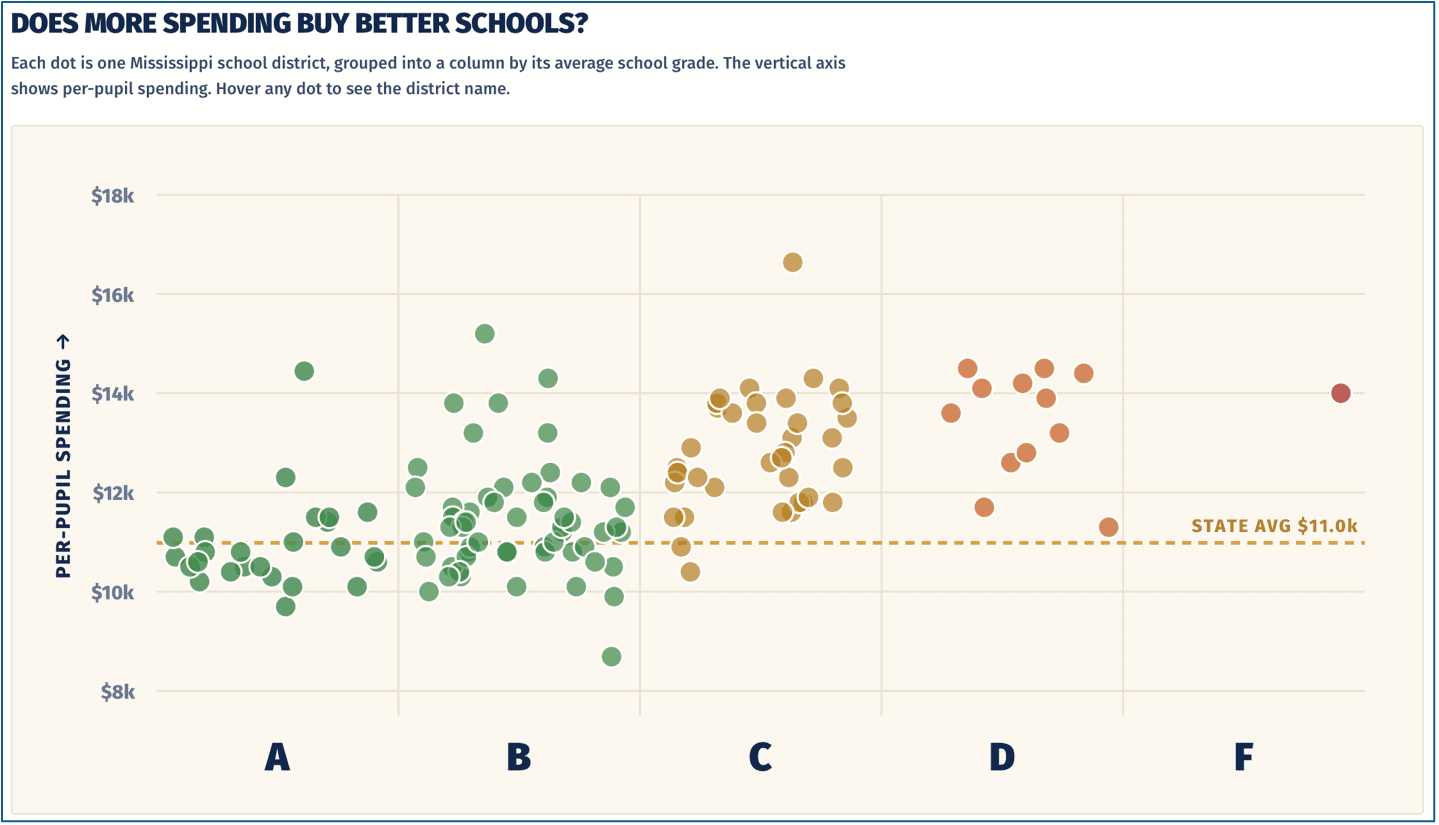
Higher spending, worse results
Across Mississippi’s districts, higher per-pupil spending goes hand in hand with worse outcomes, not better ones. The lowest-spending quarter of districts gets, on average, 63 percent of children to proficiency in reading and math. The highest-spending quarter manages just 36 percent. Read that again. The districts spending the most are getting barely half the results of the districts spending the least.
Ocean Springs, down on the Gulf Coast, is the top-performing district in the state - more than three-quarters of its students at proficiency - on about $10,300 per pupil. Jackson Public Schools spends $16,640 per pupil, more than 60 percent more than Ocean Springs, and gets fewer than a third of its children to proficiency. Petal spends roughly 42 percent less per pupil than Jackson — and more than doubles Jackson’s results. DeSoto County, the largest district in the state, educates nearly 34,000 children on the lowest per-pupil budget in Mississippi — and still beats Jackson almost two to one.
Our webtool also allows families to compare what their public school district spends against what the local private school down the road charges to do the very same thing — and the gap is startling.
Jackson Public Schools spends $16,640 of public money on each child. A few minutes away, there are private schools that charge about a third that amount. It’s the same story across the state where typical private school charges about $7,000 a year, while often getting far better results. The public sector, it turns out, is not the cheap option.
What matters is not how much a district spends, but how it spends it. This data in Mississippi strongly suggests that what we need to see are reforms that allow families dissatisfied with what their school board has to offer with the option of taking their child’s share of funding to a school outside government control.
Mississippi’s own data — now in the hands of every parent at CompareMySchool.com — makes the argument that money is not the answer. Better-run schools are, and the surest way to get more of them is to trust parents to choose.
Lawmakers across the country often insist on making “investments” in economic programs to help fill a perceived need for skilled workers. But such efforts often put the needs of the state and favored industries ahead of the needs of individuals -- and they miss big picture questions in the process.
This critical view should be taken about the newly passed UPSKILL program, which is expected to cover tuition and fees associated with getting a certificate or degree at a Mississippi public community or junior college. The program, in House Bill 562, passed with unanimous support from lawmakers and the governor signed it into law.
Initially, the program will be exclusively for Mississippians overcoming opioid addiction, hence the funding source of the program starts with money from $50 billion opioid settlement to state, local, and tribal governments. Republican Sen. Nicole Boyd told her colleagues that the program will be good for people in recovery.
“It is the program where we encourage those that are over age 24 to up-skill and get into high priority work sectors,” she said, according to the Magnolia Tribune.
The Design Problem: Labor Market First, Person Second
But UPSKILL’s eligible programs will be determined annually by the state’s review of employer demand and workforce shortages — essentially, what the labor market needs. That sounds sensible, but in practice those designations are heavily influenced by major employers who want a trained workforce pipeline at public expense. The program could function as a publicly-subsidized labor supply program for specific private employers without those employers contributing to its cost.
Crucially such an approach underemphasizes, and even ignores, the fact that each person is born with unique gifts and talents. Asking what the labor market needs and then pushing people into state-sanctioned boxes is the reverse of what should be happening.
A person with a gift for artistry, writing, craftsmanship, early childhood education, or caregiving work might find little room in a program built around HVAC, welding, and construction certifications. The program, therefore, treats people as inputs to an economic system rather than as individuals who deserve respect for escaping addiction and now have distinct contributions to make.
The state might (and probably will) eventually justify the program’s existence and call for its expansion as students apply for funding to gain a certificate or degree in an approved field and shortages in some areas are ameliorated. But in such an analysis, there’s no accounting for quality of life, e.g., if a person finds himself in a job he never wanted just because money was available to meet the need.
The Community Problem: What the State Crowds Out
It’s also worth noting that the program creates a transactional connection between a person and an employer-defined credential, but it severs and discourages the community connections important to the growth and wellbeing of a person, especially one in recovery. The state stipend is $500, which would be a manageable dollar amount for local charities, churches, civic organizations to offer, if they were so inclined.
UPSKILL’s enabling legislation intends participants to tap into other government assistance programs, including Temporary Assistance for Needy Families (TANF) to provide up to $250 for “emergency aid, childcare stipends or transportation assistance (bus vouchers or gas cards).”
That leaves no room for local charities and organizations to engage. If they were invited to, they could offer things the state is not offering: mentorship, peer cohorts, community check-ins, drug rehab integration circles, stuff that goes beyond a program and several hundred dollars. Recovery communities know that sustainable reintegration requires more than a job; it requires belonging.
The state program also has the deleterious effect of creating an expectation that the state will step in to offer money and support services, because that’s what the state does, as proven by this program. One could reasonably ask, “where does the state’s role stop and the community effort begin?”
A person who has spent ten years in a low-wage job, never touched drugs, but lacks the credential to move up — isn’t he or she equally deserving of support? The program’s initial gatekeeping, driven by the funding source, creates a hierarchy of deservingness that puts former addicts ahead of people who also struggle.
None of this is to say the problem UPSKILL is trying to solve isn’t real. Mississippi has thousands of job openings and communities hollowed out by addiction. The state stepped in precisely because communities, churches, and civic organizations hadn’t filled the gap at scale. That’s worth acknowledging honestly. It’s also worth understanding why. Is it possible that the state government’s broad list of programs, decades in the making, played some part in the lack of persistence of non-governmental organizations to meet local needs?
The critique isn’t that the need doesn’t exist — it’s that the state’s instinct to solve it by building a pipeline for employers, rather than building up people, reflects a persistent confusion about what investment in human beings actually looks like. It also avoids the bigger questions about systemic problems that Mississippi, and many other states, must begin to understand.
— Wayne Hoffman is President of the public policy education and advocacy organization, Level Up Humanity, and is a research fellow of the Mississippi Center for Public Policy.
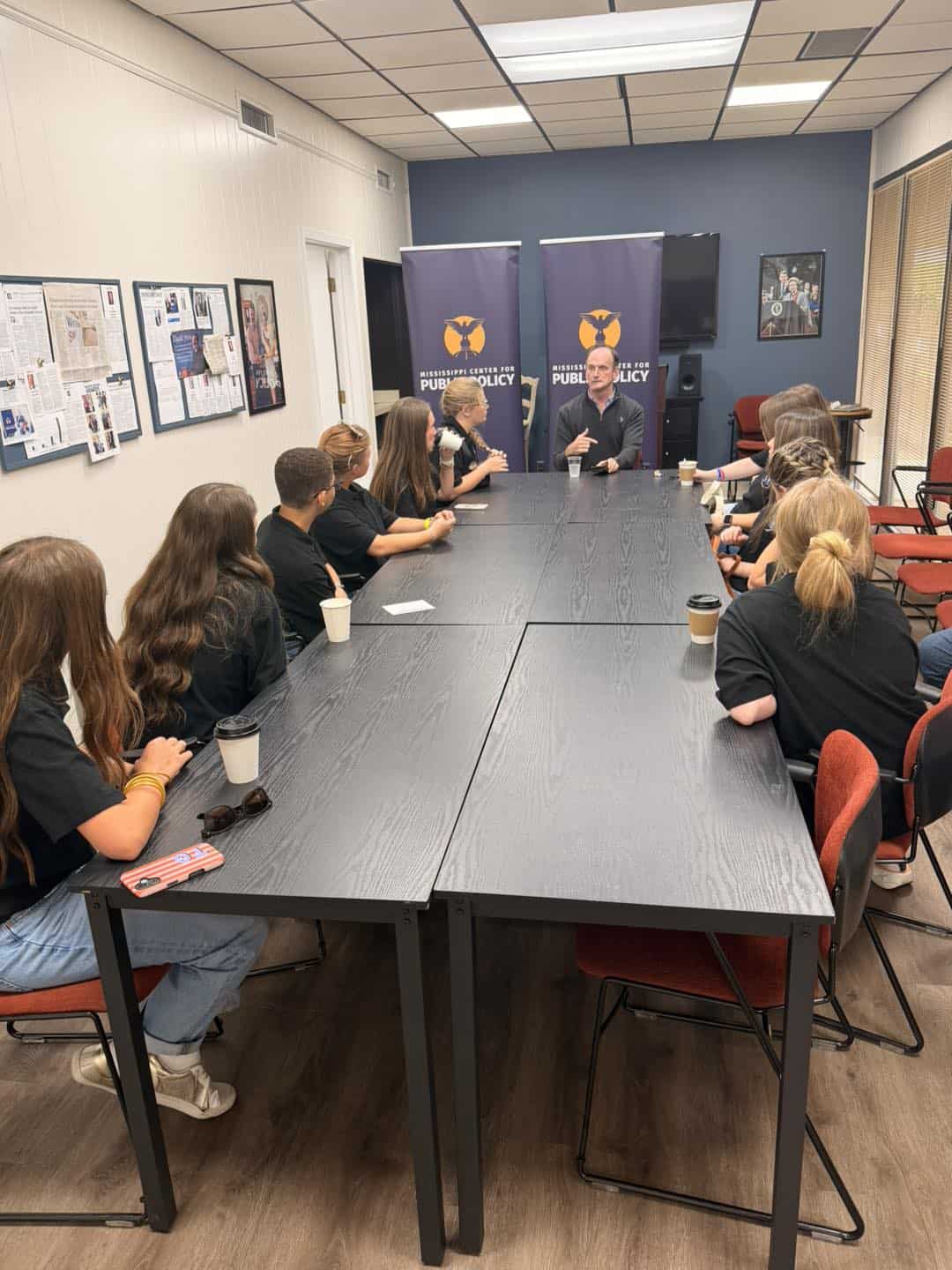
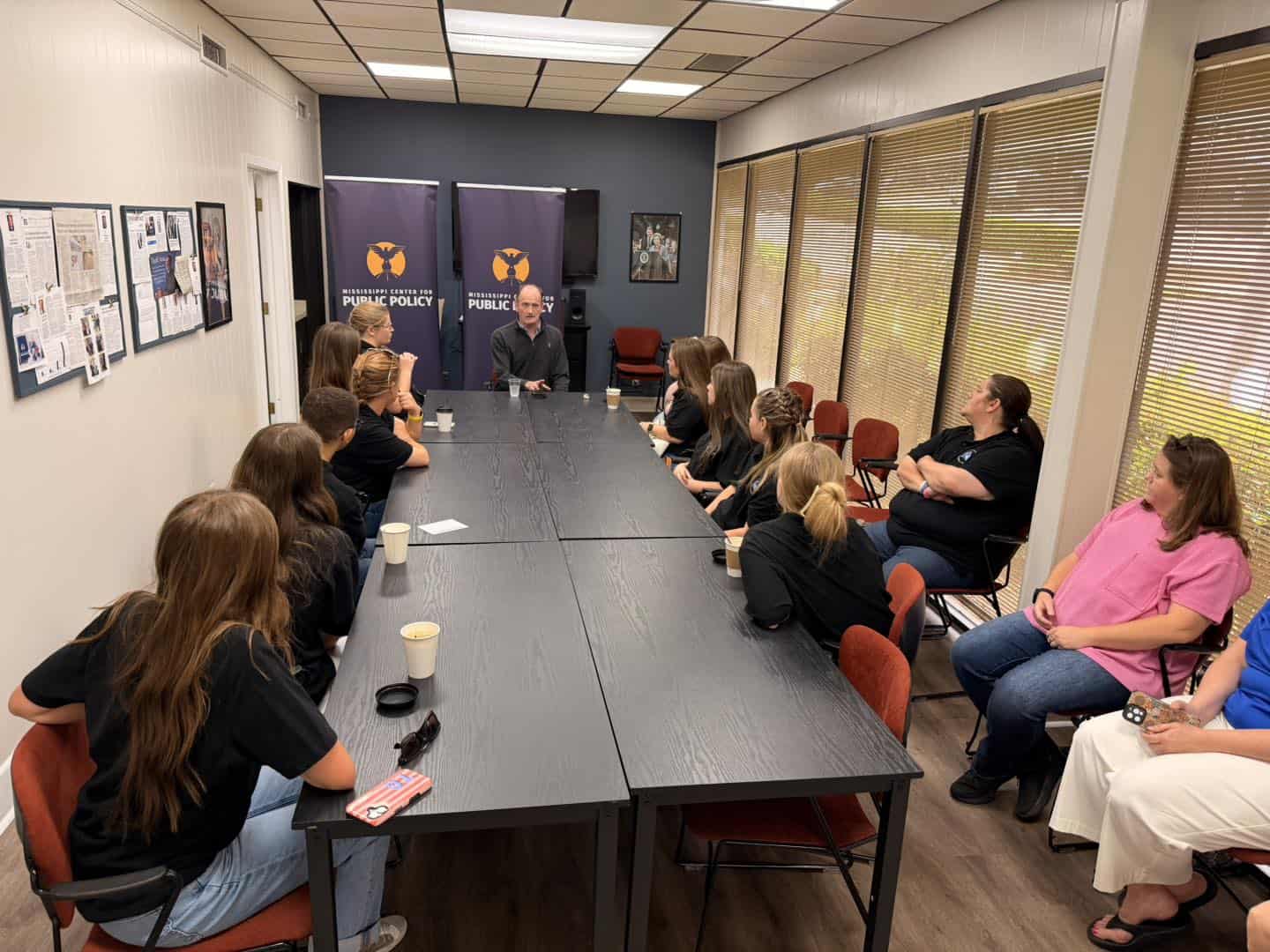
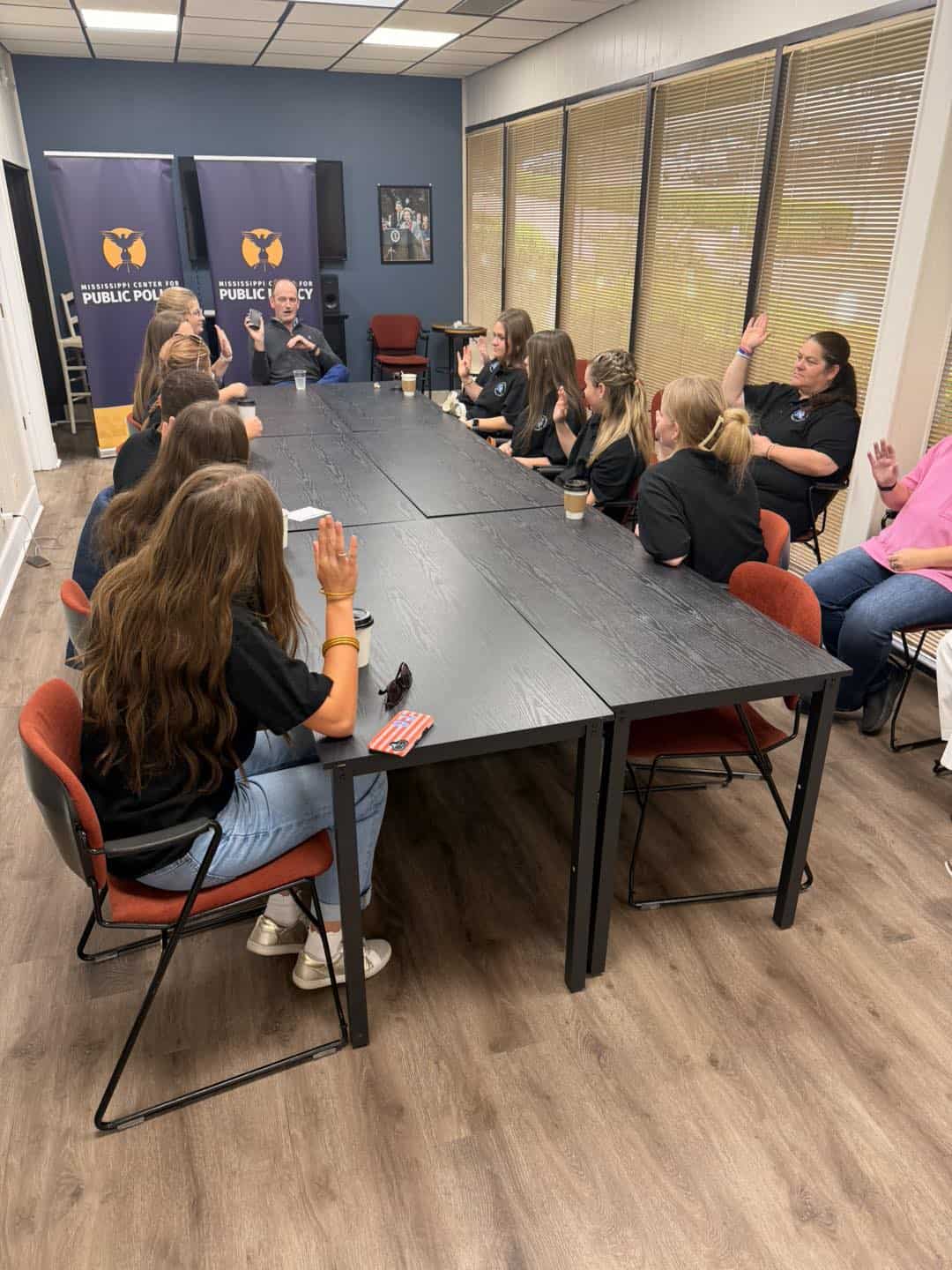
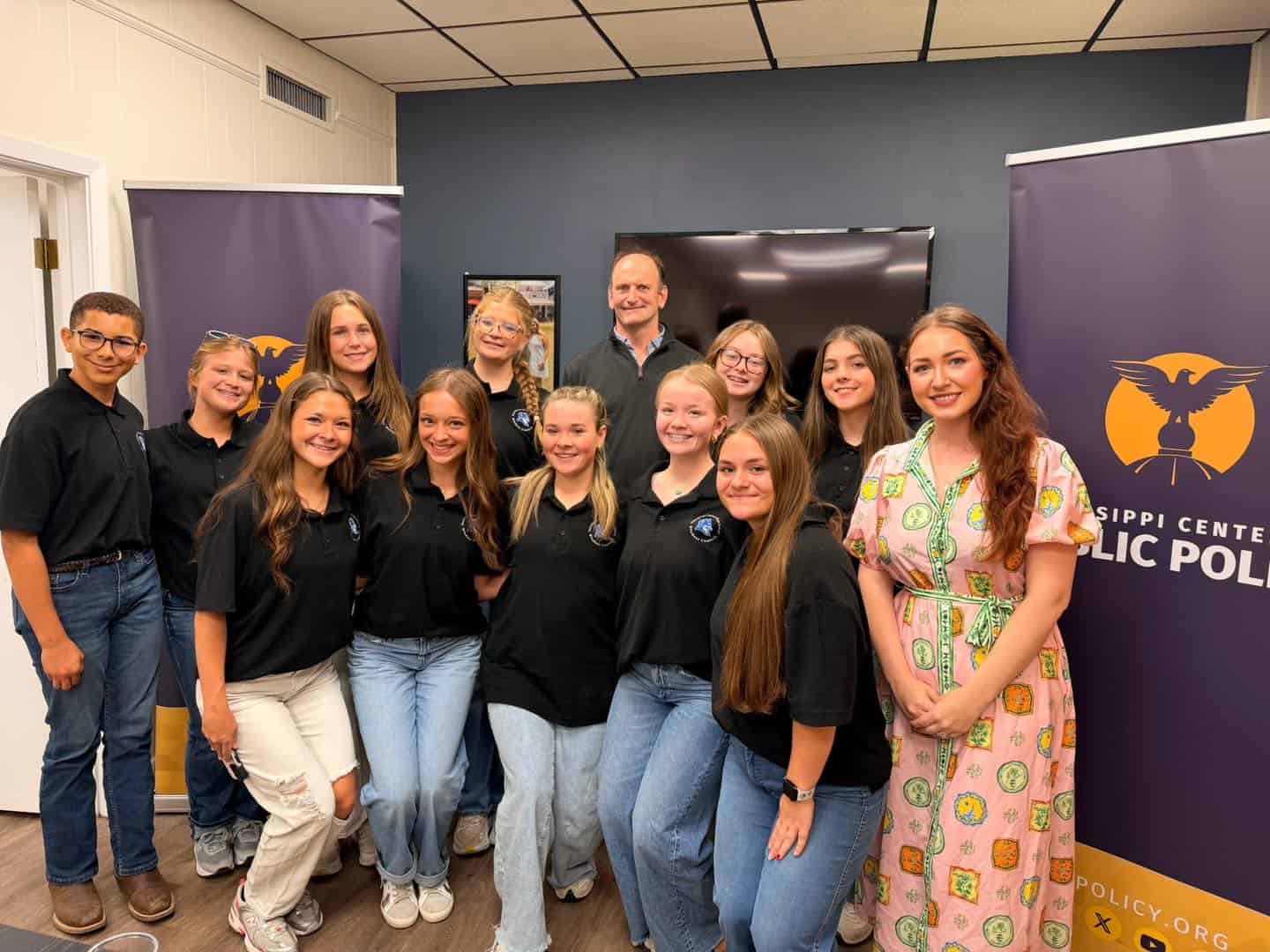
In April, we had the opportunity to welcome students from Pearl River County High School’s Student Council to our office during their visit to Jackson.
As part of a broader trip to tour the State Capitol and meet with legislators, the group made time to sit down with Douglas Carswell and our team to learn more about the role of a public policy organization and the work we do at the Mississippi Center for Public Policy.
The visit centered around a roundtable discussion covering how think tanks operate, the principles that guide our work, and how policy ideas move from conversation to implementation. Students engaged directly with our team, asking thoughtful questions about the challenges facing Mississippi, the importance of free markets and limited government, and the practical side of advancing policy solutions.
What stood out most was the level of engagement—from both the students and the educators accompanying them. The discussion was curious and encouraging, reflecting a strong interest in understanding how ideas shape real-world outcomes.
Opportunities like this matter. Creating space for young people to ask questions, engage with policy, and better understand the institutions shaping their state is an important part of building informed, thoughtful leaders for the future.
We are grateful they chose to spend part of their time with us, and we look forward to seeing where their leadership journeys take them.
While others debate these ideas from a distance, we’re in the room teaching them.
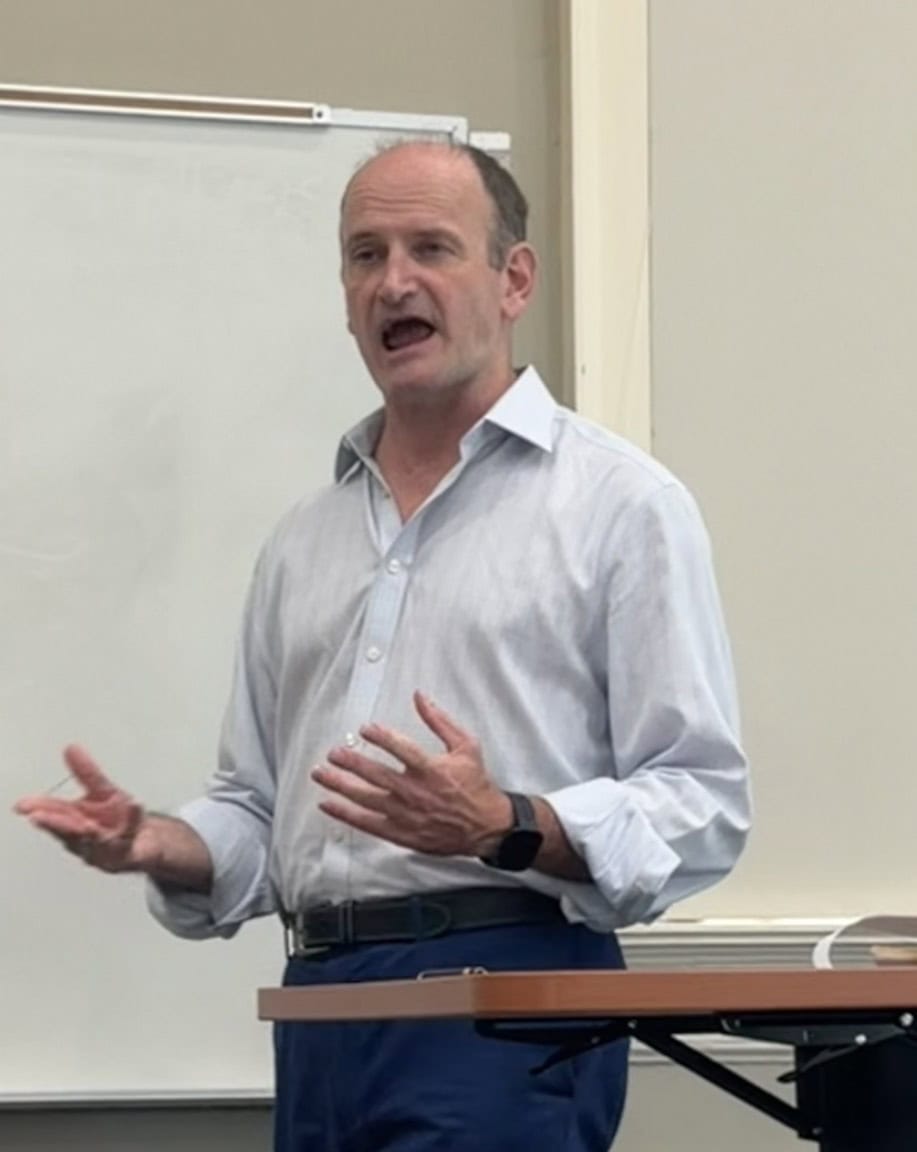
This semester, Douglas Carswell was invited to serve as a guest lecturer at the Declaration Center for Freedom Studies at the University of Mississippi—spending the semester working directly with students on the principles that make societies prosper.
Week after week, he made the drive to Oxford to lead conversations on free markets, limited government, and individual liberty—not as abstract theories, but as ideas with real-world consequences. Students were challenged to think critically, engage deeply, and wrestle with the foundations of a free and flourishing society.
Free markets. Limited government. Individual liberty.
The next generation isn’t just hearing about these ideas—they’re being trained in them, challenged by them, and equipped to carry them forward. In a time when many institutions are moving away from these principles, opportunities like this matter more than ever.
Not slogans. Not trends.
Real ideas, taught in real classrooms, to the next generation of leaders.
This is how you build something that lasts.


A small win for freedom in Mississippi! Governor Tate Reeves recently signed HB3, a law that reforms the state’s Certificate of Need (CON) rules.
CON is basically a government approval process healthcare providers (like hospitals) must go through before they can add certain services, build new facilities, buy expensive equipment, or make big expansions.
HB3 makes some modest changes, allowing more flexibility for some specific providers. It also raises the dollar threshold for capital spending requiring approval.
Perhaps the most significant part of the bill is that it mandates the Mississippi Department of Health to do a study over the course of this year into the feasibility of letting smaller hospitals skip CON when providing kidney dialysis treatment and adult psychiatric services.
While HB3 does not give us the reforms Mississippi needs, it is a step in the right direction. In a legislative session that has seen most significant reforms killed in the Senate, this is one rare example of a free market reform in the 2026 session.
As we kick off 2026, the Mississippi Center for Public Policy is more energized than ever. We are excited about the successes our state has seen – and we have a plan to build on that momentum with further free market reform!
For decades, our state lagged behind. Growth was slow and too many young people left our state to seek opportunities elsewhere. That is starting to change.
Over the past five years, Mississippi has seen more economic growth than in the previous 15 combined.
Mississippi’s progress is real, but it did not happen by chance. It is happening thanks to free market reform - including major tax cuts, flexible labor laws, affordable energy, and fiscal discipline.
MCPP aims to help build on this in the 2026 legislative session. We have a clear, targeted plan for further free market reforms. Here is our focus for the 2026 legislative session which starts this coming week:
- School Choice
Mississippi has already taken a strong step by assigning every public-school student a personalized education budget. Now is the time to let families truly control it. We are working to see a universal Education Savings Account (ESA) program, modeled on successful reforms like Arkansas’s LEARNS Act.
Other education reforms, such as making it easier for families to move from one public school to another are important, but the key goal must be an ESA system, just like they now have in Arkansas, Tennessee and Alabama.
- Repeal of Certificate-of-Need (CON) Laws
Mississippi’s outdated health regulation regime stifles competition, blocks investment in healthcare and drives up costs - especially in rural areas. We are pushing for a partial repeal of these restrictions across regulated services.
It is also essential that we grant Advanced Practice Registered Nurses full practice authority. These changes could lower healthcare costs significantly, expand rural access, and save millions annually - freeing the market to deliver better, more affordable care.
- Conservative Spending
To enable future tax cuts, and to prevent the public sector crowding out local businesses, we need to see fiscal discipline in this state. The fiscal climate is changing, and the days of large federal subsidies is coming to an end. It is essential that our lawmakers live within our means. That means keeping spending under control and not squandering any surpluses.
These are MCPP’s big three priorities for the coming session – and we will be working closely with key lawmakers and our coalition allies to advance them.
MCPP is also supportive of a number of other reforms up for discussion. For example, we would love to see a restoration of the ballot initiative. With labor-force participation in Mississippi still too low, we would love to see reform in welfare administration to ensure more stringent requirements on able-bodied welfare recipients, and more meaningful sanctions for non-compliance. We would support such changes, but they are not our primary focus for this session.
We are super excited at the start of the 2026 legislative session. Our team will be working hard to ensure real reform – and I will be sure to keep you personally updated on the progress we make as the session advances!
For decades, Mississippi has been the punchline in national discussions about economic performance - often ranked at the bottom in income, education, and opportunity.
But something remarkable has happened in recent years: the Magnolia State is undergoing a genuine resurgence, driven not by federal handouts or gimmicks, but by principled free-market reforms.
A major national publication, the Washington Examiner, recently spotlighted this transformation in a feature titled "Mississippi Turning." The article notes that Mississippi has achieved more economic growth in the past five years than in the previous 15 combined.
This isn't hyperbole; recent data from the Bureau of Economic Analysis shows Mississippi posting some of the nation's strongest GDP growth rates, including a 4.2% real GDP increase in 2024 that ranked second nationally.
What’s fueling this engine? Bold structural changes that prioritize freedom, competition, and low barriers to opportunity.
First, labor-market reforms have opened doors for workers and entrepreneurs. In 2021, Mississippi enacted universal recognition of out-of-state occupational licenses, allowing skilled professionals to bring their talents here without jumping through needless bureaucratic hoops. The state has also slashed red tape on in-state licensing requirements, eliminating hundreds of hours of mandatory training for many everyday jobs. These changes have attracted talent, put downward pressure on remaining barriers, and made it easier for Mississippians to earn a living.
Second, historic tax reform is putting money back in people's pockets. Starting with the largest tax cut in state history in 2022, Mississippi phased in a flat 4% income tax. In 2025, lawmakers went further, enacting legislation to reduce the rate to 3% by 2030 and trigger annual cuts thereafter until the state income tax is fully eliminated—the first such move by a state in decades. This pro-growth policy rewards work and ambition while making Mississippi more competitive for businesses and families.
Third, a commitment to reliable, low-cost energy has made the state a magnet for investment. By resisting costly subsidized green mandates, Mississippi has kept electricity prices among the nation's lowest, powering energy-intensive industries like data centers and advanced manufacturing. Major announcements, including billions from companies like Amazon Web Services, underscore how affordable energy translates into jobs and capital inflows. Since 2020, the state has attracted tens of billions in private investment, fueling record-breaking economic development.The results speak for themselves: explosive GDP growth, surging personal incomes, rising university enrollments, and—for the first time in generations—net in-migration as people choose to move to Mississippi rather than away. Recent years have seen positive net migration, reversing long-standing outflows and signaling a brighter future.
This turnaround didn't happen by accident. It's the direct consequence of free-market ideas championed by policymakers and advocates who refused to accept the status quo. Mississippi is no longer just catching up; it's becoming a national model that other states are watching closely.
As we close out another productive year, moments like the Washington Examiner's recognition remind us that principled, steady work pays off. Mississippi is proving that freedom works—creating a freer, more prosperous place for all its citizens. Other states should take note: lower taxes, fewer regulations, and reliable energy are the path to revival.
Click here to read the Washington Examiner article.
FOR IMMEDIATE RELEASE
October 30, 2025
MISSISSIPPI CENTER FOR PUBLIC POLICY HONORS LEGISLATIVE HEROES AT ANNUAL GALA CELEBRATING STATE SUCCESS
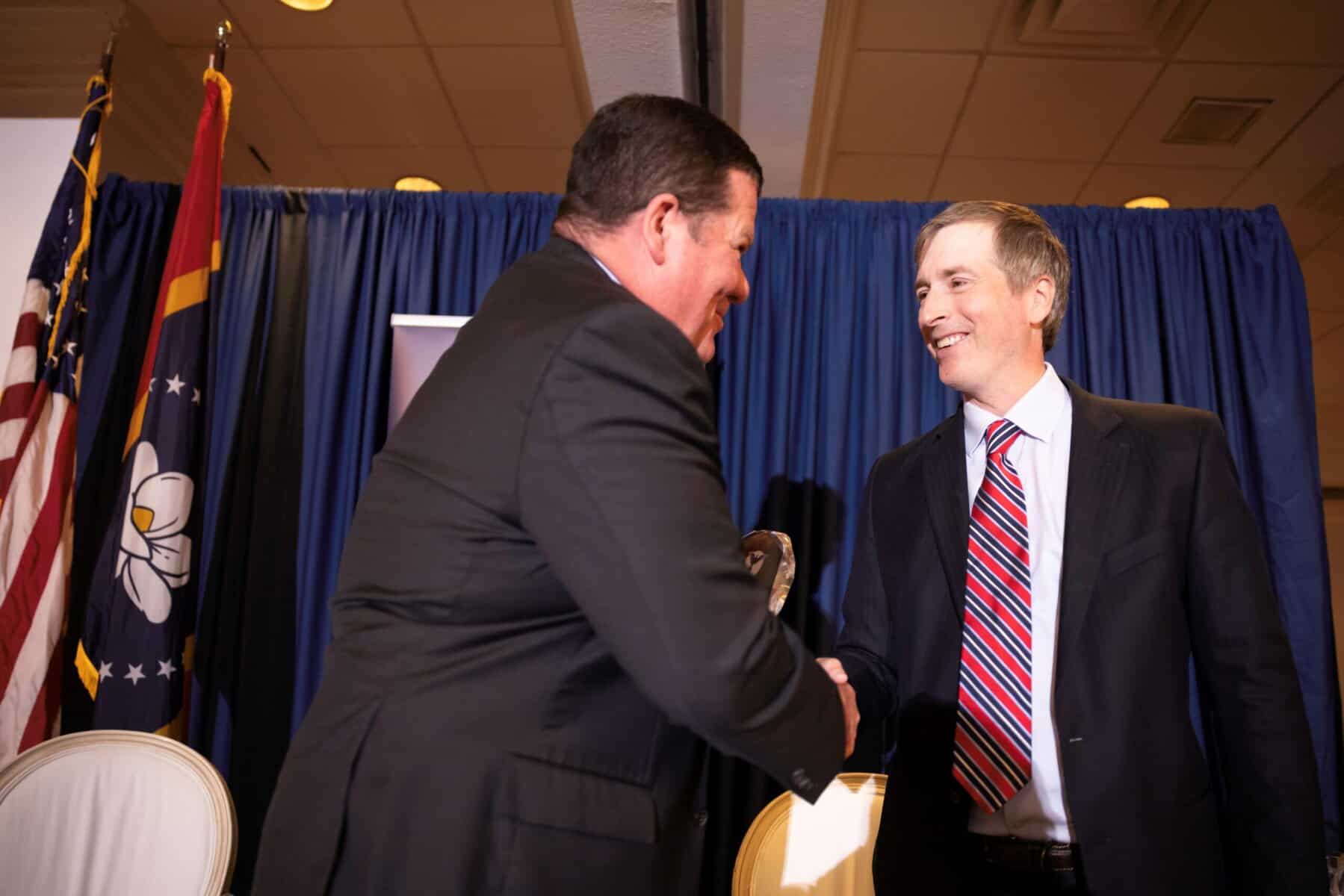
JACKSON, MS – October 30, 2025 –Six of Mississippi’s leading lawmakers were presented with award to honor them for championing principled conservative policy. Rich Lowry, editor of the National Review, presented each of the winners.
Healthcare
Rep. Sam Creekmore and Rep. Hank Zuber were jointly honored for their leadership in challenging Mississippi’s Certificate of Need (CON) laws, which restrict the expansion of healthcare providers and limit patient access.
Countering DEI
Sen. Angela Hill received the award for her early and unwavering stand against the encroachment of divisive DEI (Diversity, Equity, and Inclusion) policies in Mississippi’s public universities. Long before the issue gained national attention, Sen. Hill worked to safeguard academic freedom and institutional integrity at the state’s flagship campuses.

Education Reform
Rep. Jansen Owen was recognized for leading the 2025 legislative effort to expand open enrollment through HB 1435. Though the bill passed the House with broad bipartisan support - uniting parents, educators, and lawmakers - it was ultimately blocked in the Senate.

Income Tax Elimination
Mississippi became the first state since Alaska in 1980 to phase out its personal income tax through HB1. Rep. Trey Lamar and Speaker Jason White were honored as the driving forces behind this transformative reform. Through public town halls, transparent negotiations, and superior policy arguments, the duo outmaneuvered opposition and delivered a pro-family, pro-growth tax cut that is already attracting investment and enhancing Mississippi’s competitiveness.“


These lawmakers represent the best of conservative leadership - courageous, principled, and effective,” said Douglas Carswell of the Mississippi Center for Public Policy. “Their work is making Mississippi a national model for freedom, opportunity, and common-sense governance.”